I was standing in the psychiatric ward of Thimpu’s
National Institute of Traditional Medicine,
where patients with mental conditions are sent after answering a few
preliminary questions at the reception desk, which is housed in a wooden
box beside a prayer wheel. My mental condition: I’d been in the
Himalayan Kingdom of Bhutan for four nights and I was dizzy, unfocused
and having trouble sleeping due to the arid 2,200m-plus altitude.
A busy young female doctor measured my blood pressure and asked me if
I was feeling “giddy”. After reviewing the results, she suggested I
stop drinking coffee and prescribed me some herbal pills and a hot
sesame oil compression therapy, to be administered in the adjacent room.
“And take hot baths in the evenings if you can,” she said. These were
the doctor’s words I’d been hoping to hear.
Like many, I’d come to Bhutan with many questions and in search of
many answers. Answers I hoped I would find during visits to remote
mountain-perched monasteries and by encountering the mindful Buddhist
way of life that earned the country the nickname Kingdom of Happiness.
But, I confess, I also came to Bhutan with the implicit hope of
experiencing its unique hot stone baths, a form of traditional Bhutanese
medicine where fresh river water is mixed with local Artemisia leaves
and heated with fire-roasted river stones. After all, one of the ancient
names for Bhutan is Menjung, which means The Land of Medicinal Herbs,
and its traditional medicine and rich pharmacopoeia dates back to
7th-century Tibet, as well as borrowing heavily from Indian Ayurvedic
practices.
These duelling traditions led to the alchemy behind the baths, in
which hot stones are deposited into a chamber of the wooden tub,
purportedly releasing high concentrations of minerals, while the heated
natural river water and Artemisia absinthium (wormwood, the source of
Absinthe) allegedly have a meditative effect. Versions of these baths
exist all over Bhutan, from luxurious five-star resorts to charming
rustic farmhouses.
A doctor’s prescription is not required to soak in the baths, but it
certainly helped me justify the ensuing pampering. It is required,
however, to hire a guide in Bhutan, as part of the daily visa fee that
applies towards your transport, hotels and meals. I hired my guide
Namgay through
Audley, a tour agency that offers customizable itineraries that include visits to Bhutan’s hot stone baths.
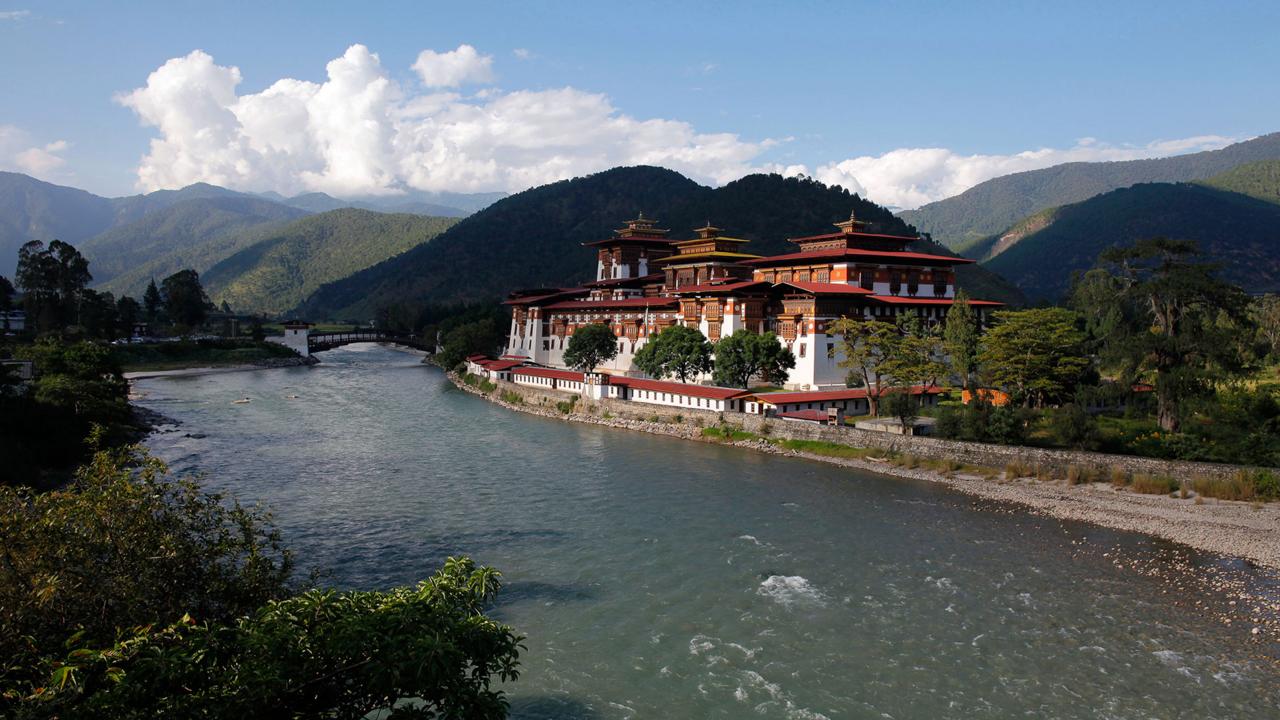
My first stop was Punakha, the ancient capital and official winter
residence of Thimpu’s monks due to its warmer climate and lower altitude
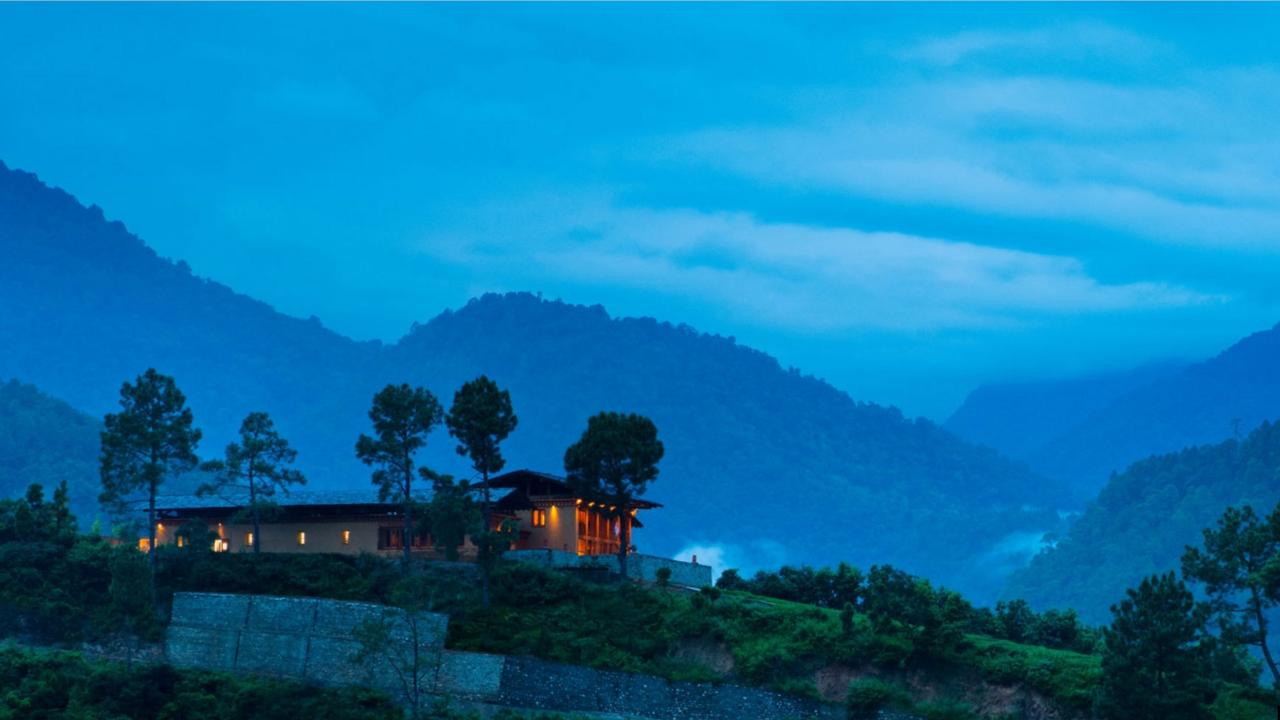
at 1,200m. I booked a night at the small, luxurious
Uma
hotel, perched on a ridge overlooking the Punakha Valley and the Mo Chu
River. Its treehouse-like rooms were comfortable, but the spa and
health cuisine were the real draw card. Like all hot stone baths in
Bhutan, appointments are necessary and you must give the staff a few
hours’ notice so they can build a fire, heat the river stones and draw
the bath.
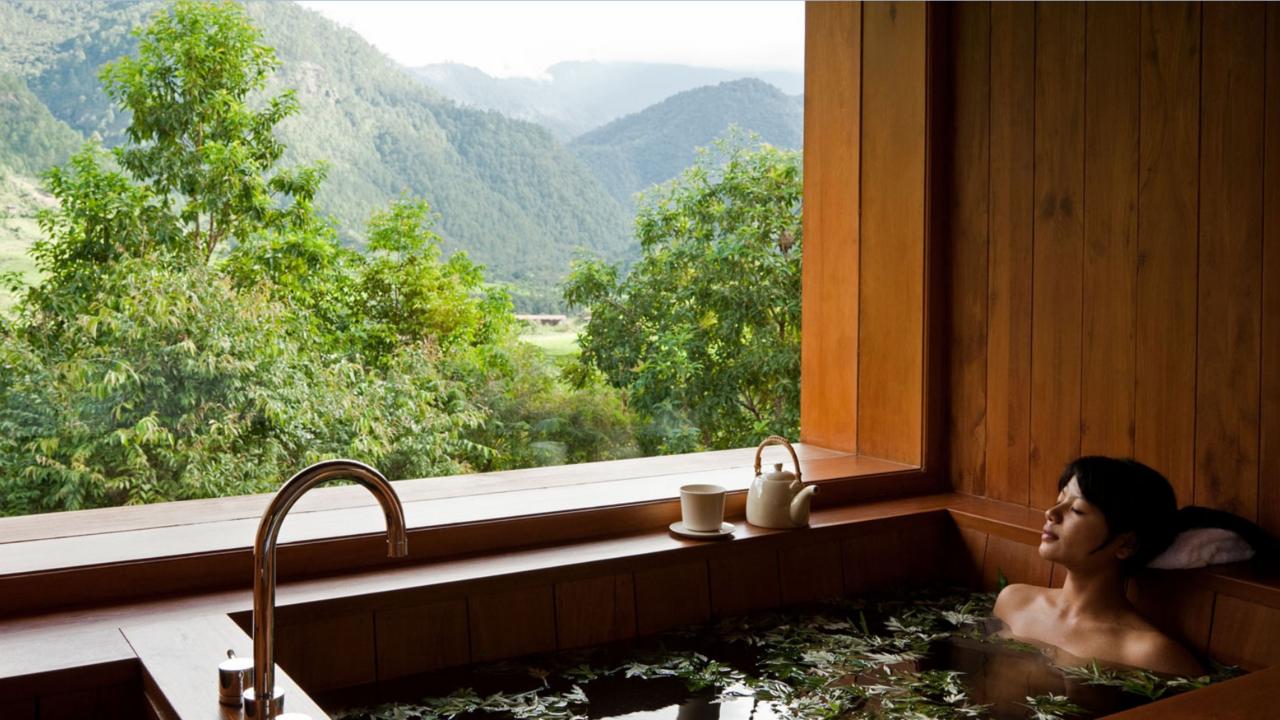
My lanky Bhutanese therapist Thandey met me in the treatment room to
explain the 30-minute procedure. The bath was already warm and scattered
with floating artemisia leaves. Thandey told me to undress and settle
into the water, and ring a bowl-shaped bell if I wanted more hot stones.
When I rang the bell, a chute opened and out tumbled a load of molten
red rocks, which sizzled and steamed, immediately raising the
temperature. Next to the bath was a pot of tea and a collection of
plastic shampoo bottles. Admittedly, Uma’s was not as authentic as some
of the other hot stone baths I’d soon try, but it certainly set the tone
of my trip to deeply relaxed and tranquil.
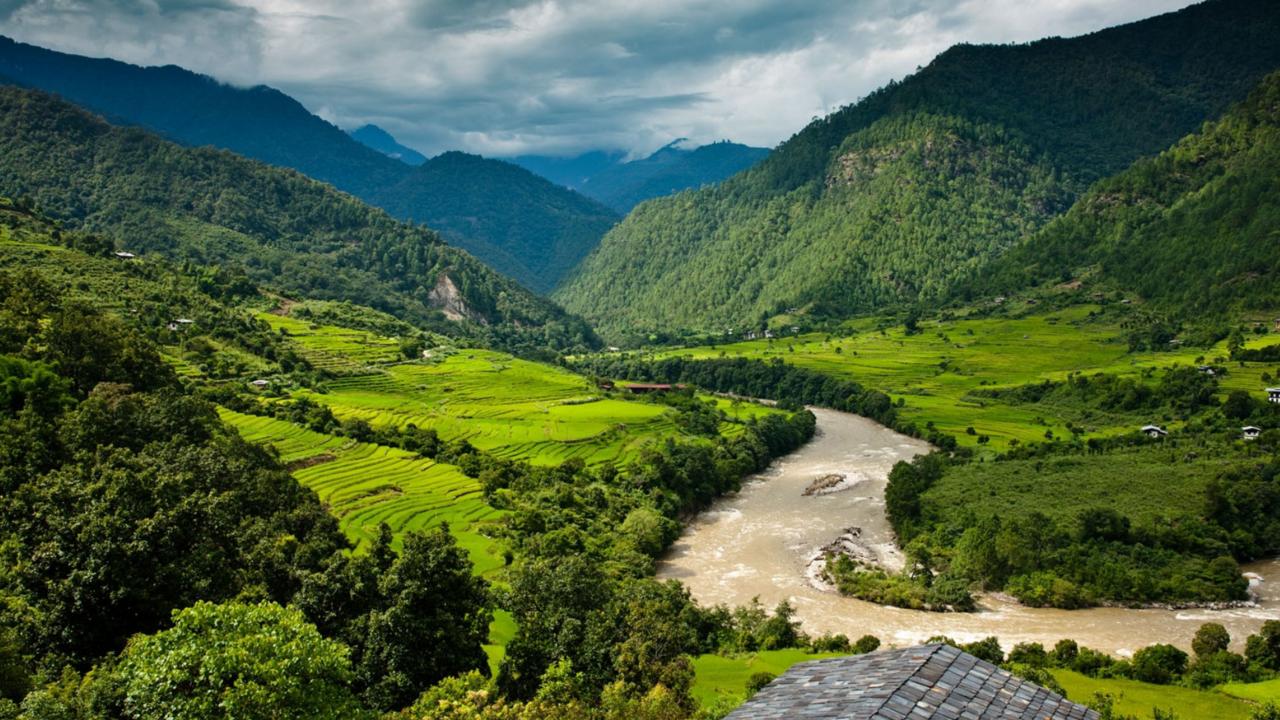
A spectacular 75km rollercoaster drive east took us to Gangtey, nestled in a 3,000m-high glacial valley in the
dzongkhag (district) of Wangdue Phodrang. The village is known for its iconic 15th-century
Gangtey Monastery
and the highly endangered black-necked cranes that migrate here every
winter, always circling the monastery three times before landing. It’s
also where I experienced my most memorable and scenic soak.
Inside a local farmer’s stone shed, set in an open field planted with
beetroot and potatoes, was a rustic and elegant bath. It might not
sound like much, but it is administered by
Amankora Gangtey,
one of five Aman resorts in Bhutan, arguably the country’s most
high-end. A staff member led me off the resort’s property for the
10-minute walk to the shed, where I started my treatment with a sweet
welcome tea around the bonfire and was introduced to the shed’s owner,
an old smiling Bhutanese farmer wearing a traditional
gho, a knee-length robe tied with a belt.
Inside the shed, 12 candles flickered from wall-mounted votives. Like
most traditional Bhutanese baths, the water was solely heated from
fire-roasted stones, and on the tub’s bottom was a silty layer of sand
from the release of the stone’s minerals. The tub itself was made of
oak, which is said to hold the water’s heat better than pine. On a table
beside it was a bowl of chips made from potatoes harvested in this very
field. Next to it was a small ornate bell cast with Tibetan script. I
was told to ring it when settled in the hot water. With the ring, two
Aman staffers theatrically flung open the door to reveal the entire
valley tumbling below and the mist-strewn monastery perched on the
opposite hill.
During my sublime 40-minute soak, I munched on the crunchy chips and
listened to the newly arrived black-necked cranes whose calls were
eventually drowned out by the
dungchen (trumpet-like horns)
played by the monks at the monastery. It was an inspiring experience and
a highlight of all my trips, not just to Bhutan, but anywhere.
Pushing east another 160km, we travelled to the town of Bumthang in
the less-touristed Central Bhutan region, where I experienced a
traditional bath at the
Sherab Dema Farmhouse Homestay.
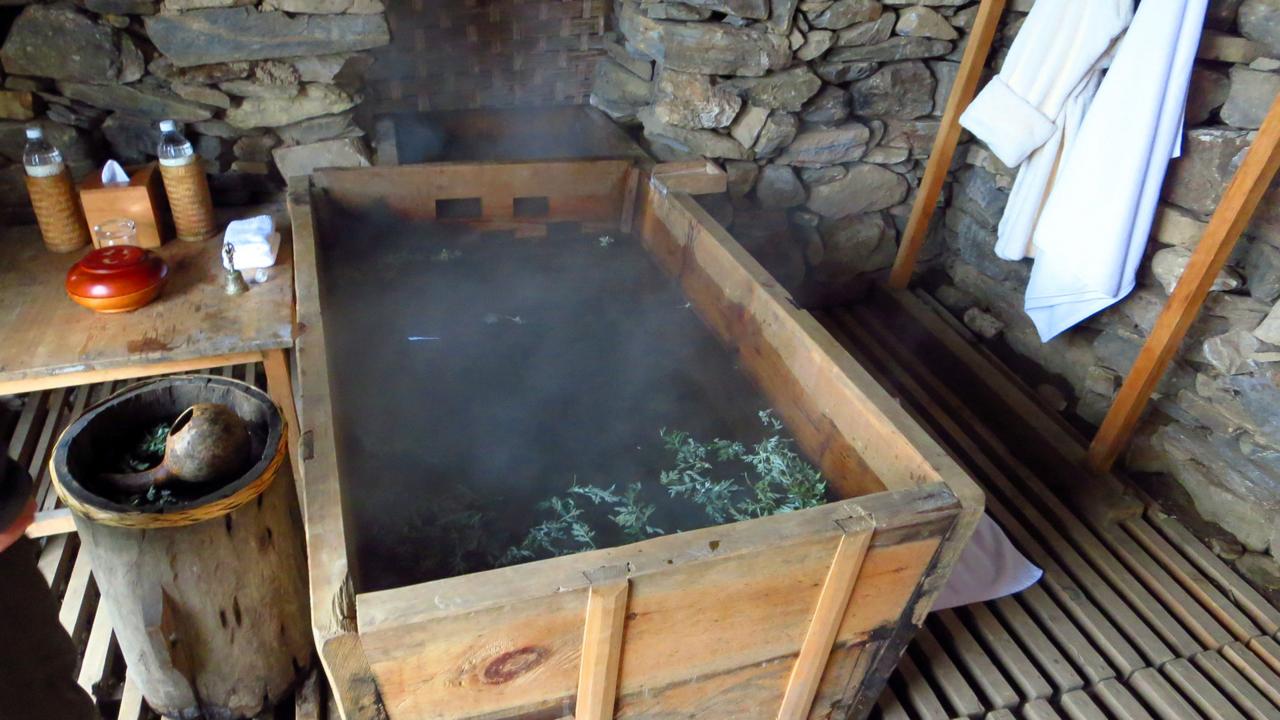
The tub was housed in one of four adjoining sheds, each slightly wider
than a changing room cubicle. Inside were a few hooks to hang my
clothes, and a bath with no view, bell or pots of tea. This is how the
Bhutanese did it. I undressed and slid into the soothing water. From
outside, Namgay asked if I needed more hot water, while the owner’s son
sat by the fire singing and downloading music to his mobile. After a
good 40-minute soak, my host Mrs Sherab cooked a delicious traditional
dinner, which included the national dish of
ema-datsi (chilli peppers cooked in cheese) and a tender beef
tshoem (stew), which we ate while sitting on the floor around a traditional
bukhari woodstove. Afterwards, I sipped on her homebrewed
ara, a light pinkish shochu-like spirit made from millet and strawberries. It was so delicious, I bought a bottle.
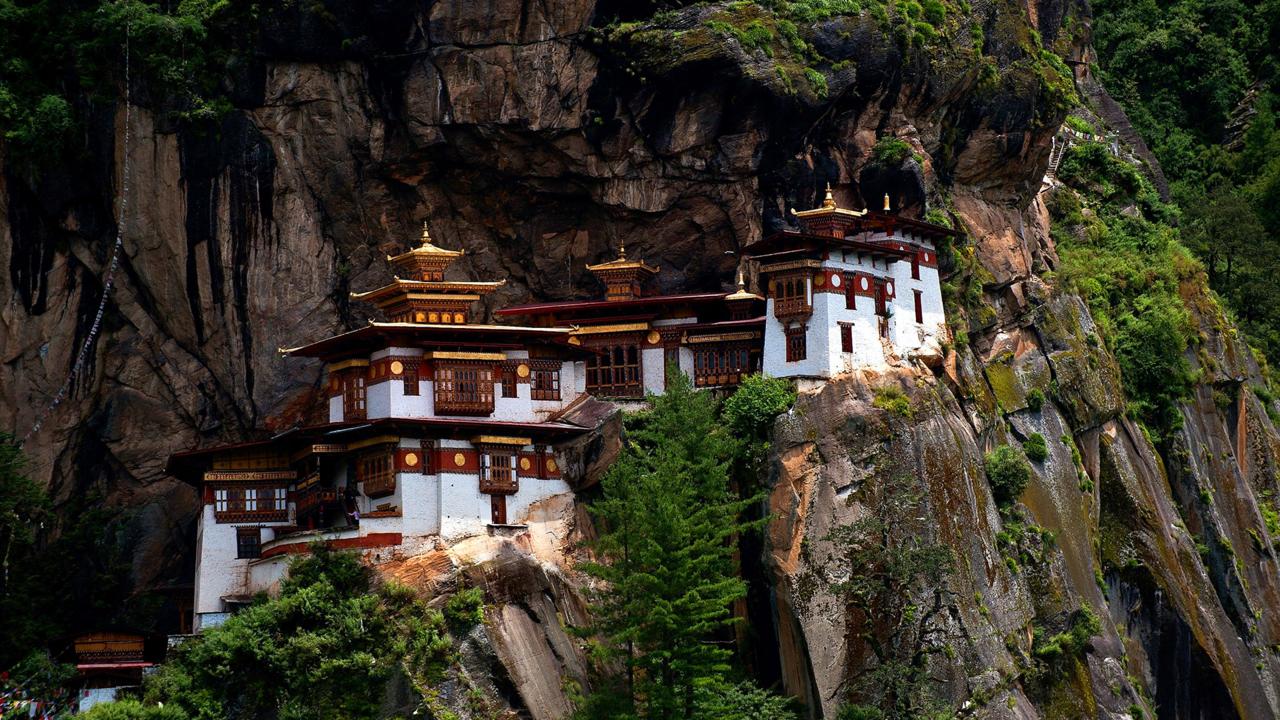
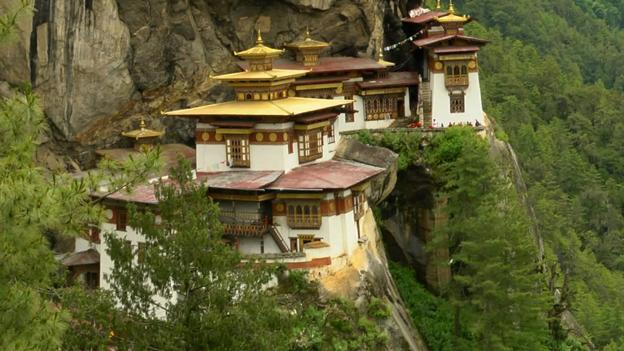
My final few nights were spent in the small city of Paro, home to Bhutan’s main airport and the famed
Tiger’s Nest Monastery.
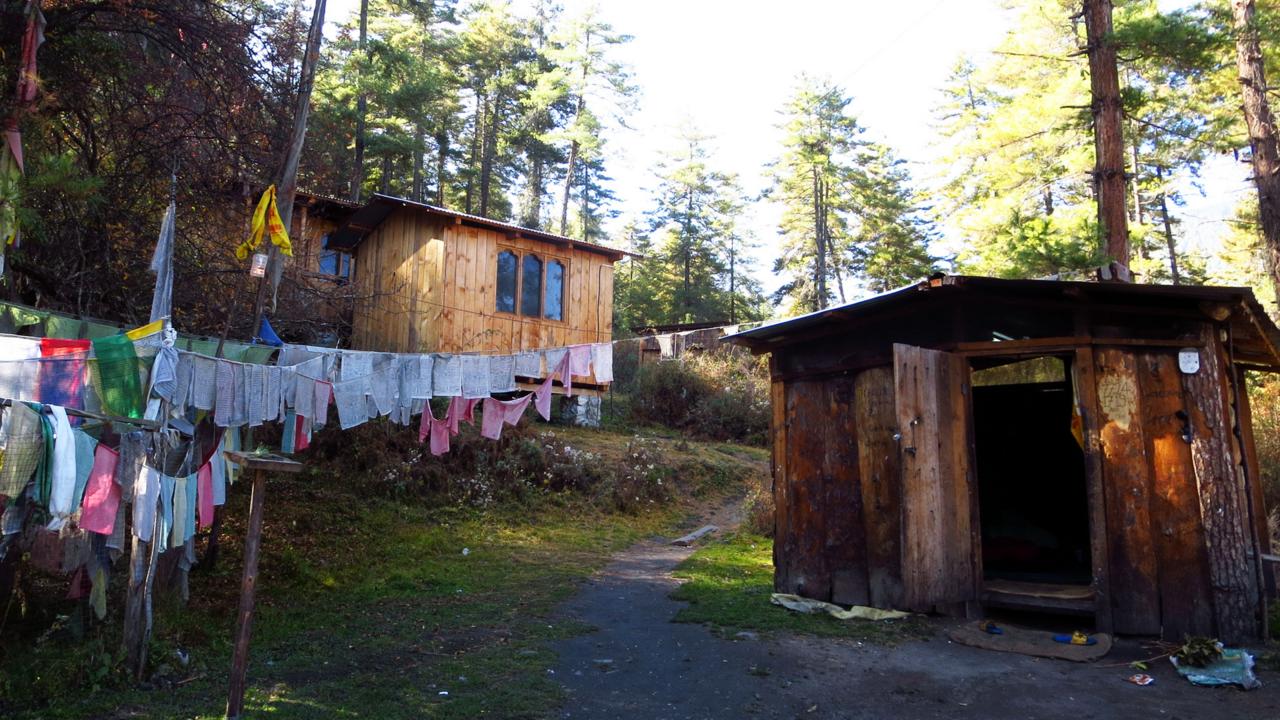
Here, I scheduled in two baths, but only made it to one. The first was
an outdoor roadside springs we stopped at after a hike to the
Kila Nunnery
on the Chele La Pass, the highest motor road in Bhutan at 3,700m.
Namgay warned me that these were for locals and might not be sanitary.
He was right. The narrow rectangular baths, embedded a few metres into
the ground, resembled half-buried coffins and were frequented by the
elderly and very sick. So instead of bathing, we spent 45 minutes
birdwatching, spotting a black-faced laughing thrush, long-tailed magpie
and kalij pheasant from the road.
The last bath was during the full moon on my final night in Bhutan.
Uma Paro
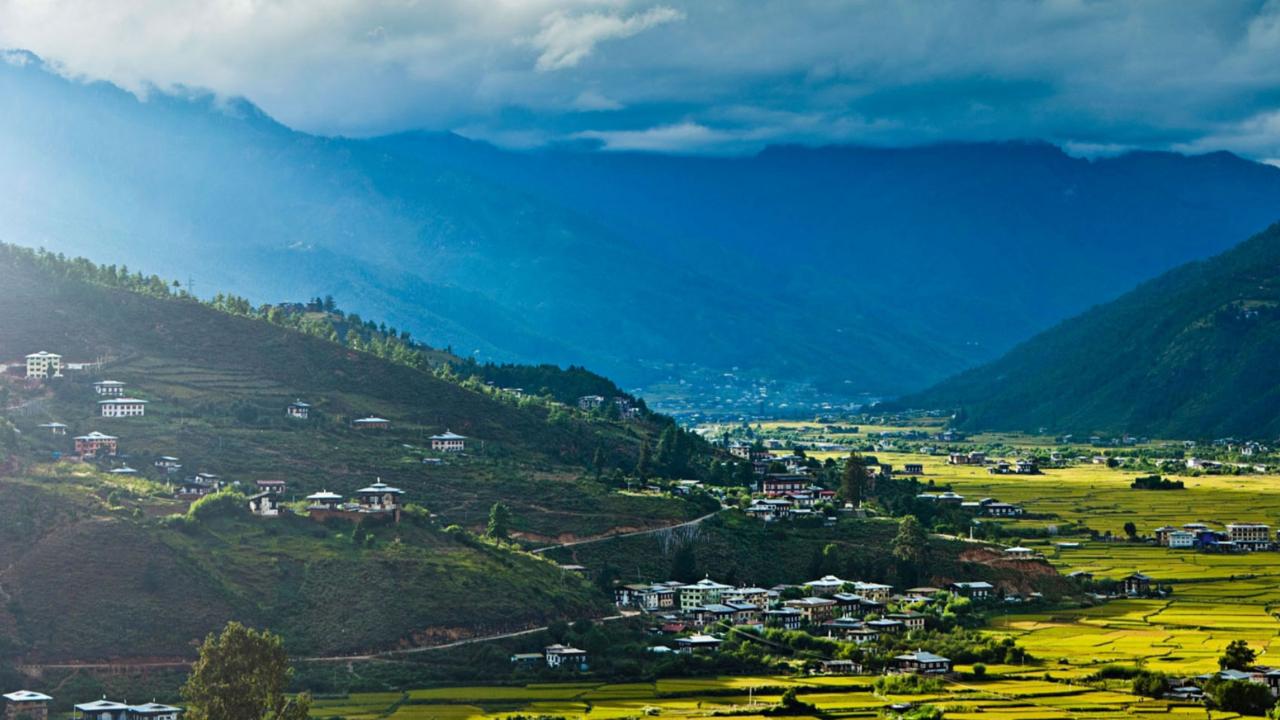
resort is a spacious and leafy compound with a modern spa that
overlooks the glittering and mitten-shaped Paro Valley. The bath itself
was sprinkled with pink Himalayan salt flakes and a variety of colourful
wildflowers in addition to the herby green Artemisia leaves. I slunk
into the water and rang the bell for more hot water immediately, now an
old pro at the ritual. As the spa’s last guest for the evening, I felt
like a king overlooking the Kingdom of Happiness as I watched the milky
moonlight bathe the pine forest and valley below. And for one very
brief, fleeting moment, all my questions were answered.
Where do you rank in our tribe of worldly readers? Answer these questions to get a sense.