วันอังคารที่ 2 กุมภาพันธ์ พ.ศ. 2559

My search for Gaddafi's golden gun


Man in blue T-shirt and baseball cap holding golden gunImage copyrightAFP
When Libyan rebels celebrated the death of Muammar Gaddafi, the colonel's gold-plated pistol was held up as a symbol of their victory - I watched as they passed it among themselves. Four years on, I've been back to Libya to find the man with the golden gun.
On my mobile phone I have a picture I took in Libya on 20 October 2011. It shows a young man in a blue shirt and a New York Yankees baseball cap. He's smiling, being carried on the shoulders of his comrades through the town of Sirte.
These men are rebel fighters from Misrata. Col Gaddafi has just been captured and killed. In the photo you can see them passing among themselves a golden pistol.
It was Gaddafi's personal handgun. In that moment it became a totem - a symbol of the rebels' victory, and of a transfer of power in a new Libya.
Nabil Ali Dagouich with gunImage copyrightAFP
Just over four years later, the country is in turmoil. Rival governments - backed by their own militias - are vying for control. Libya is fragmenting along ideological and geographical lines - east versus west, Islamist versus secularist.
The group that calls itself Islamic State is exploiting the power vacuum and has taken control of Gaddafi's hometown of Sirte.
Amid this turmoil, I've returned to Misrata. Two-hundred kilometres east of Tripoli, the city now functions as a semi-independent city state. I'm looking for the man with the golden gun. I want to know what has become of him and the other fighters who captured Gaddafi.
Gabriel Gatehouse and Anwar Suwan in 2011
Image captionGabriel Gatehouse met Anwar Suwan in 2011
My first visit is to an old contact - Anwar Suwan. He was a key figure in Misrata during the revolution. When Gaddafi was killed, fighters brought his body to Anwar, and Anwar put the corpse on public display in a large refrigerated meat locker.
Anwar's base is still much as it was during those heady days - a collection of semi-furnished shipping containers on a strip of land near the coast, overlooking the Mediterranean.
We arrive at night. It's raining and bitterly cold. There's been a power cut, so we huddle round the coals of a brazier in the dark, drinking hot, sweet tea.
"The situation is not good," says Anwar, as we look at old photographs and remember happier days.
"They cut off the head of the snake, Gaddafi. But now there are hundreds of snakes replacing him. We are still fighting for the same thing - to find a just ruler for Libya. But everyone wants to rule. There are guns everywhere. What a situation!"

Find out more

  • Gabriel Gatehouse's report The Hunt for the Golden Gun is broadcast onNewsnight on Wednesday 3 February at 22:30 GMT on BBC Two
  • A longer version will air on Our World from 20:30 GMT on Friday 5 February on BBC orld

I tell Anwar I'm looking for one specific gun: Gaddafi's golden pistol.
He mentions the name Omran Shabaan - one of the fighters who captured Gaddafi. In some of the shaky footage of that event, filmed on the mobile phones of the rebels, Shabaan can be heard trying to stop the mob from killing Gaddafi.
Another man who was there that day, Ayman Almani, shows me the footage he shot - never played in public before before. It shows the dictator's final moments more clearly than ever - he can be seen bleeding and pleading.
Media captionPreviously unseen footage of the moments just after Gaddafi's capture in 2011
"He deserved it," says Ayman, looking back on it now. "Islam teaches us not to mistreat a prisoner, not to bear a grudge. But the people got carried away in the stampede and no-one could stop them."
Omran Shabaan became a hero. He was photographed with the golden gun, and came to personify the hope that Libyans could heal their wounds after months of bitter fighting. It was not to be.
Omran Shabaan
In 2012, Shabaan himself was captured by Gaddafi loyalists in the town of Bani Walid. They beat him and tortured him. By the time the Misratans negotiated his release it was too late. He died of his injuries in a French hospital.
Anwar Suwan tells me he thinks Shabaan may have had the gun with him when he was taken. Perhaps the gun was now back in the hands of Gaddafi loyalists?
Then I show him and his comrades my picture of the man in the baseball cap.
"Mohammed Elbibi," someone recognises him. That was indeed the name I had used in the report I filed to London on that day back in 2011.
Anwar says he doesn't know what has become of Mohammed. But he promises to find out.
Gabriel Gatehouse holds the golden gun in 2011
Image captionNabil Derwish showed me the gun in 2011
Another contact, who also handled the gun, thinks the pistol is still in the city, but he doesn't know who has it.
Finally, I get hold of a phone number for Mohammed Elbibi and he agrees to meet me in his home in the centre of the city.
We sit down and I show him the picture of himself with the golden gun.
"I remember," he smiles. "I was 17 years old!"
He tells me he had nothing to do with the lynching of Gaddafi. He simply found the colonel's gun lying on the ground near the place where he was caught. But, in the confusion of the moment, and seeing him with the gun, the other rebels thought it was Mohammed who had killed him. He became the accidental hero of the revolution.
"What about the gun?" I ask him. It turns out he still has it. He shows it to me - it's a 9mm Browning handgun, gold-plated and decorated with an elaborate floral pattern.
It appears to have been a gift - Mohammed believes from one of Gaddafi's sons - on the occasion of the 32nd anniversary of the revolution that brought him to power. Almost exactly 10 years later, pictures of Mohammed Elbibi brandishing that same pistol would signal the final end to the Gaddafi era.
Gabriel Gatehouse and gun now
Image captionGabriel Gatehouse finally finds Gaddafi's golden gun again
But Mohammed is wary of his trophy. There are still Gaddafi loyalists out there, and he has received death threats.
"Please tell the world it was not me who killed Gaddafi," he says.
Did he imagine that, nearly five years later, Libya would still be at war with itself?
"I did not," he says. "I am really sad about that. When I see Libyans killing Libyans, it's too bad. Everybody wants to be like Gaddafi."

More from the Magazine

Close up of Gaddafi's gun - the words 'Made in Belgium' are visibleImage copyrightAFP
Gaddafi's golden gun bears the words "Made in Belgium" - an engraving that points to another story. Three years ago, arms experts spotted a single advanced Belgian rifle in the hands of militants in Gaza. But how had a group listed by the EU and the US as a terrorist organisation obtained the weapon? Arms expert Nic Jenzen-Jones and the BBC's Thomas Martienssen tracked its journey and traced it back to a 12m euro shipment of Belgian arms to Libya agreed in 2008.

วันศุกร์ที่ 29 มกราคม พ.ศ. 2559

Aung San Suu Kyi's party prepares to govern Myanmar: 5 questions

Democracy vs. a military legacy The euphoria after electing 'The Lady' and her party is over. On Feb. 1 a parliament of pro-democracy politicians will be seated. Five questions about their task, the ongoing civil war, the old secret police, and the fight against corruption.


  • View Caption
Hundreds of new politicians in Myanmar are moving their belongings into scruffy government dormitories in Naypyitaw, the capital. These are the winners in last fall's historic elections that saw pro-democracy parties roundly oust the military-led government. Now, on Feb. 1, they will don silk longyis and Shan turbans and inaugurate arguably the most important and delicate phase yet in a long- delayed but hopeful transition out of authoritarian rule.
Last November, the National League for Democracy (NLD), led by Nobel laureate Aung San Suu Kyi, won 77 percent of the available seats and routed the proxy party of the generals. It was the most open elections in 25 years, and that night, thousands of people poured into the streets of Rangoon, singing, dancing, and waving red balloons.
Now comes the hard work of governing.
“We have been trying [to gain a foothold] for more than three decades,” said U Win Htein, spokesman of the NLD and a former political prisoner, to the Monitor. “We are living the history now.”

Here are five questions that bear on the transition ahead:
1) People often think Myanmar, formerly Burma, is now a full democracy. But isn’t it still a military-civilian system undergoing transition? What is important to watch now?
Yes, under the 2008 constitution, the military retains much power, including a 25 percent block of seats. This gives it a virtual veto over constitutional changes, which require more than a 75 percent vote in parliament. The military also retains critical cabinet posts: the ministries of home affairs, border security, and defense.
Moreover, Aung San Suu Kyi, the NLD chairman who is widely seen as the country’s legitimate popular leader, is constitutionally barred from the presidency. In defiance, she has said she will stand above any president. According to Win Htein, the NLD will announce its nominee for the presidency and the vice-presidency within a week of the inaugural session of parliament.
The official handover of the executive branch, including the presidency and the cabinet, will not happen until late March, following an election in the parliament of the NLD's nominee. One of the legislative body's first tasks will be to vote on a speaker and deputy speaker for the upper and lower houses. On Monday, Aung San Suu Kyi and her aides met for nearly two hours with arguably the most powerful man in the country, the Army commander-in-chief, Senior Gen. Min Aung Hlaing. The discussion, according to Win Htein who was at the meeting, was a net positive. The “overall impression was that we can work together for the development of the future of our country,” he said.
But the subtext of the meeting was that whatever happens now will require a delicate ongoing dialogue between the NLD and the military.
2) Isn’t there an ongoing civil war in Myanmar?   
Conflict has intensified between the Army and a number of armed ethnic-minority militias that want autonomy, mostly along the borders. The key question is whether the NLD can control the military in those conflict areas and initiate a real peace process.
The outgoing government of President Thein Sein signed a hasty cease-fire agreement on Oct. 15 with eight armed groups. But as analyst Bertil Lintner has pointed out, this was a “face-saving” gesture, since it included none of the most serious fighting forces. Those groups, including the the Kachin Independence Army and the Shan State Army, have been lately under attack from Burmese military units.
For years, the NLD in opposition had called for “national reconciliation” between the civilian population, the military, and ethnic minority nationalities. Now, with a sufficient majority in parliament to make senior government appointments, the NLD can finally set the conditions, not just for dialogue but for a ruling coalition.
Spokesman Win Htein confirmed that appointments by the NLD in coming days will include members of other parties. NLD executives recently confirmed that the party's nominees for parliamentary speaker and deputies include a member of the outgoing military-backed party as well as figures from the ethnic Kachin and Rakhine communities.
3) Up to and during the election campaigning, there were many reports about rising Buddhist extremism and anti-Muslim bias, especially against the Muslim Rohingya.
The main force behind the anti-Muslim virulence, a Buddhist-monk led movement called Ma Ba Tha, has been surprisingly quiet since the elections. The group seemed chastened by the victory of the NLD, which the Ma Ba Tha had begun to target as an enemy of Myanmar’s Buddhist character and legacy. But watch for noise from them again.
Meanwhile, about 1.1 million Rohingya Muslims face deep hatred and ongoing exclusion from legal membership in the county’s multi-ethnic makeup. Aung San Suu Kyi has been much criticized abroad for a failure to speak out explicitly on the Rohingya’s behalf. But now they must live up to their long-stated ideals of human rights for all, starting with the Rohingyas’ forced segregation in camps in western Rakhine state.
4) Myanmar for years was an authoritarian regime led by a military junta. What has happened to the internal security and spy services?
This is a tricky one. With the “home affairs” portfolio in the hands of the military, it remains difficult to assess if special branch police and related military intelligence units have been dismantled, or if there has been a reform of the sinister monitoring system under the “General Services Administration” that was long used to centralize information and make enemies of the population. The Army itself remains a black box.
Inevitably, though, the security agencies will face scrutiny from an increasingly vibrant media. Myanmar had among the heaviest censorship laws in the world, but they have largely been lifted. There is also a newly flourishing civil society, though people still face intimidation and restrictions on the flow of information.
And public and private fear – the greatest tool of the junta’s control – has for now vanished. Feeling less fear, as Aung San Suu Kyi once famously suggested, is the first step to freedom.
5) Can the new ruling NLD party root out rampant corruption and cronyism, and to begin to address the country’s poverty?
The NLD has made rooting out corruption a priority, along with improving the “rule of law” and raising living standards in a country that remains among the poorest in the world. The World Bank ranks it 178 out of 213 countries in per capita income in 2014. The Berlin-based Transparency International recently landed Myanmar in 144th  place out of 168 countries in its perceived corruption.
In recent years, efforts for reforms under President Thein Sein, and the lifting of sanctions, meant an influx of foreign investment and loosening up of banking. But implementation has been unclear. The operations of military-linked conglomerates has been opaque. They, together with a handful of business moguls, have held a monopoly over key natural resources including oil and jade. That means the NLD economic team will have to tread carefully, according to members of its economic team. To really address an entrenched system of bribery, or “tea money” in the local parlance, will take a generational change, said tycoon Serge Pun.

วันพุธที่ 27 มกราคม พ.ศ. 2559

The leper that saved a reef

Despite living in utter isolation on a desert island for 40 years, one inspirational couple has overcome disability and blindness to make a difference.
For a man who’s spent more than 40 years on a deserted island, Daeng Abu fizzes with a surprisingly exuberant love of life.
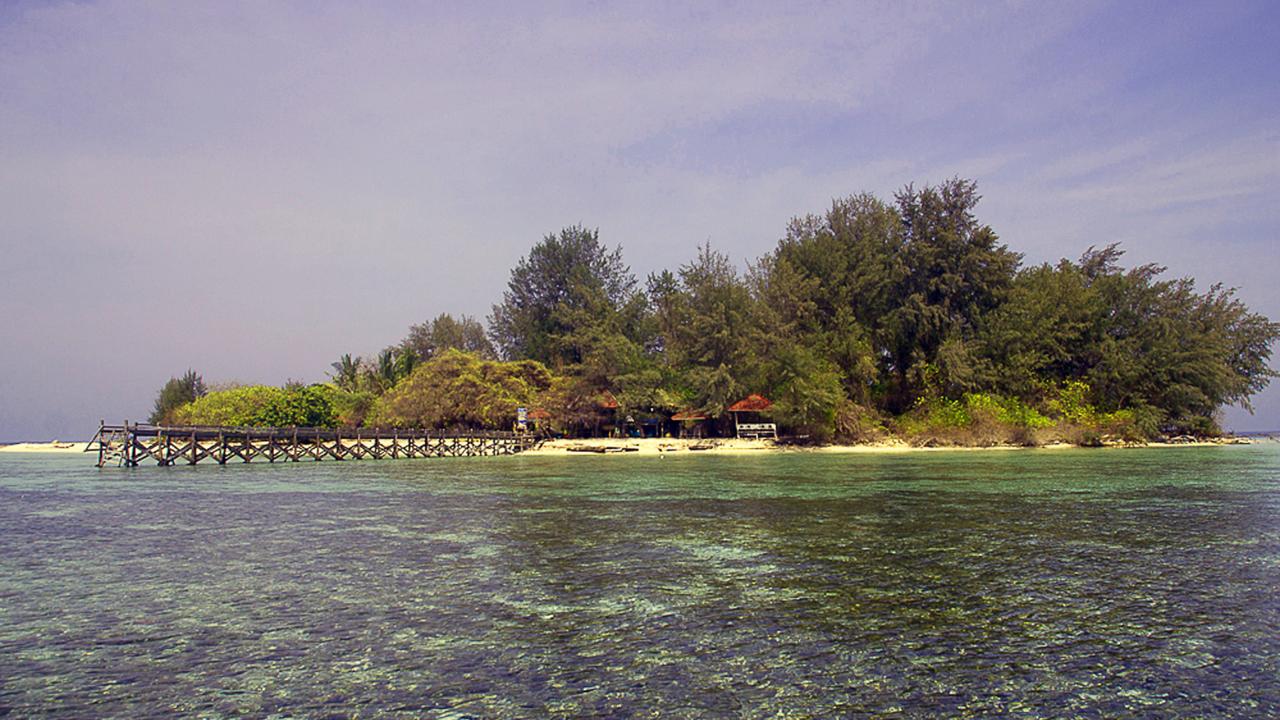
As he welcomed us to Pulau Cengkeh (Clove Island), a white-sand islet off the coast of Sulawesi, Indonesia, Abu’s toothless gums gaped in a joyous cackle. His blind, white eyes disappeared in ripples of laughter lines and his leprous hands reached out in a warm embrace. He and his wife Daeng Maida have lived alone on Pulau Cengkeh since 1972. 
Pulau Cengkeh is the white-sand islet off the coast of Sulawesi, Indonesia (Credit: Credit: Theodora Sutcliffe)
Pulau Cengkeh is the white-sand islet off the coast of Sulawesi, Indonesia (Credit: Theodora Sutcliffe)
Neither knows how old they were when they entered their arranged marriage on nearby Pulau Pala (Nutmeg Island) – they currently believe they're in their 80s – but Abu thinks he was older than 20 and Maida remembers it was the dry season. Her uncle fired three shots in the air; she walked over to his family's home; Abu built a shack from bamboo and palm leaf; and married life began.
Little did they know at the time – the couple was bound to become a rather unlikely pair of environmental activists, spending their days raising sea turtles and speaking against the cyanide and dynamite fishing that is devastating Indonesia's reef. But first, life had other plans.
Soon after their marriage, Daeng Abu and Daeng Maida became a rather unlikely pair of environmental activists (Credit: Credit: Theodora Sutcliffe)
Soon after their marriage, Daeng Abu and Daeng Maida became a rather unlikely pair of environmental activists (Credit: Theodora Sutcliffe)
As the couple settled into marriage, Abu free-dove to depths of 25m or more for giant clams and abalone, embarking on weeklong fishing trips around the islands. Maida kept their house, cooked and wove. Wet season turned to dry season, and dry to wet. Sometimes they ate fish, sometimes only rice. And Maida bore six children; five died of shaking sickness before the age of one.
Sakká, their only surviving child, was already grown when Abu realised something was terribly wrong. “I was diving for abalone,” he recalled. “I felt my body was getting bigger, that it was packed tight like a sack of cement.”
In the dark of night, Abu set out for the city, Makassar, paddling and sailing for 12 long hours. Many times, over many years, he made this journey. The family always prioritised medicine over food.
While speaking with me, Abu scraped his long, black thumbnail down his forearm, then again across a thigh, recalling the day the “big doctor” tested him for feeling and found he'd lost sensation in his limbs. When Abu told Maida he had kusta, the local term for leprosy, she wept. If Abu couldn't dive, or at least catch fish, the couple would not eat.
Soon after, in 1972, the head of their district asked for volunteers to live and raise turtles on Cengkeh, about an hour by sailboat from Pala. Nobody wanted to go. But Abu felt a desert island would be the perfect spot to escape both social stigma and the risk of infecting others as his disease followed its disfiguring course. A turtle hatchery was work the pair of them could do, and the government stipend would keep them when he became too sick to fish.
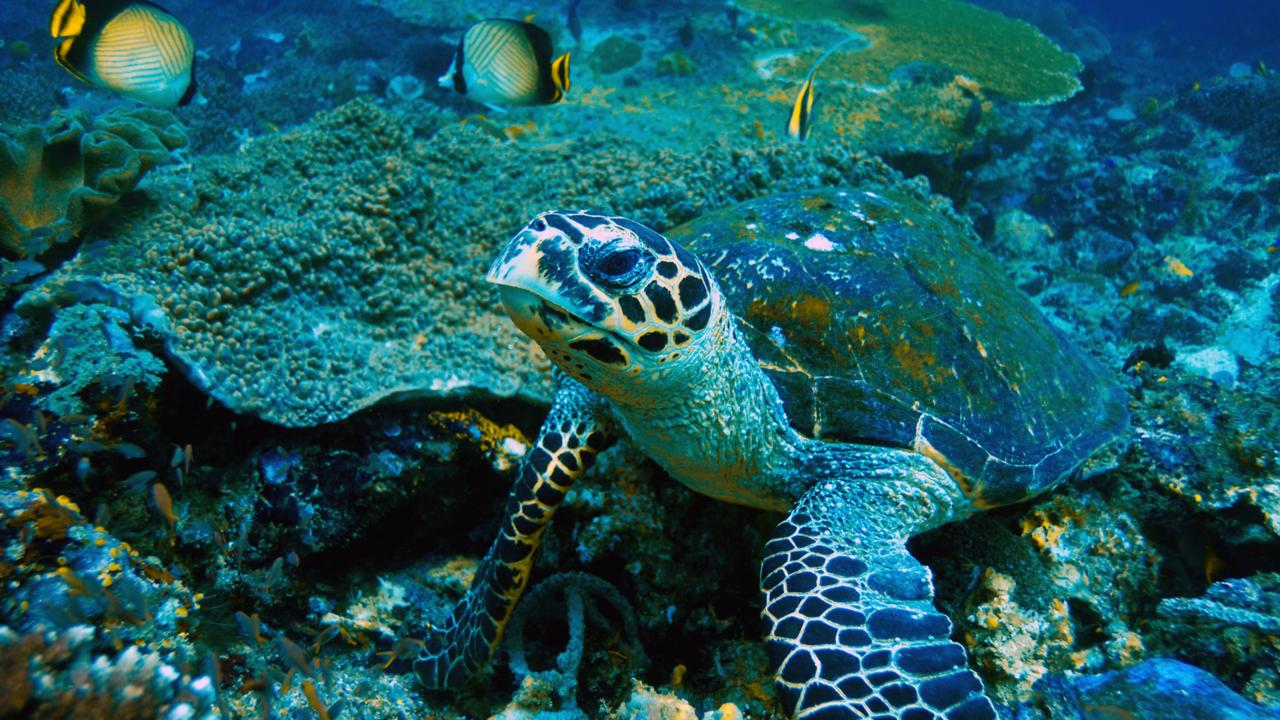
In 1972, Daeng Abu answered the call for volunteers to live and raise turtles on Pulau Cengkeh (Credit: Credit: Manfred Bail/Alamy)
In 1972, Daeng Abu answered the call for volunteers to live and raise turtles on Pulau Cengkeh (Credit: Manfred Bail/Alamy)
He disassembled their house, loaded it and their few possessions onto a boat and sailed it to Cengkeh. “Everyone was crying,” he recalled. “They were saying: 'Why are you going to the island? It's like you're a bad guy.'”
And, alone on Cengkeh that first evening, as the sun set, they cried, too.
Many Buginese islanders bury their dead on uninhabited islands for fear of ghosts and walking corpses. Cengkeh was once one of these islands of the dead, and even today the pair still say they hear the spirits and feel their grasping hands.
But when they arrived, Cengkeh was just a barren teardrop of sand, offering no shelter from blazing sun or bitter storms. Abu planted seeds, which grew into shady trees enmeshed with tangled vines, and generation after generation of baby turtles emerged, flippers flailing, from their nests in the soft sand.
Daeng Abu cultivated Pulau Cengkeh so that generation after generation of turtles could breed there (Credit: Credit: Raquel Mogado/Alamy)
Daeng Abu cultivated Pulau Cengkeh so that generation after generation of turtles could breed there (Credit: Raquel Mogado/Alamy)
In the early days, the pair raised them for sale in Makassar, perhaps for aquariums, more likely for meat. But as government priorities changed, so did their role, and now they raise turtles for release.
Indonesia's 17,000-or-so islands sprawl over 5,000km across the equator amid one of the world's most biodiverse and extensive coral reefs – more than 80% of it under threat. Turtles are essential to this fragile ecosystem: by feeding on destructive algae and sponges, they keep the coral healthy.
Yet there's a larger threat to the coral than turtle loss. Cyanide and dynamite fishing emerged in the 1990s as a labour-saving technology that helped local fishermen catch fish for export. By throwing a handful of pesticide or a water-bottle bomb onto the reef, a bounty that might have taken weeks to catch would float to the surface as if by magic.
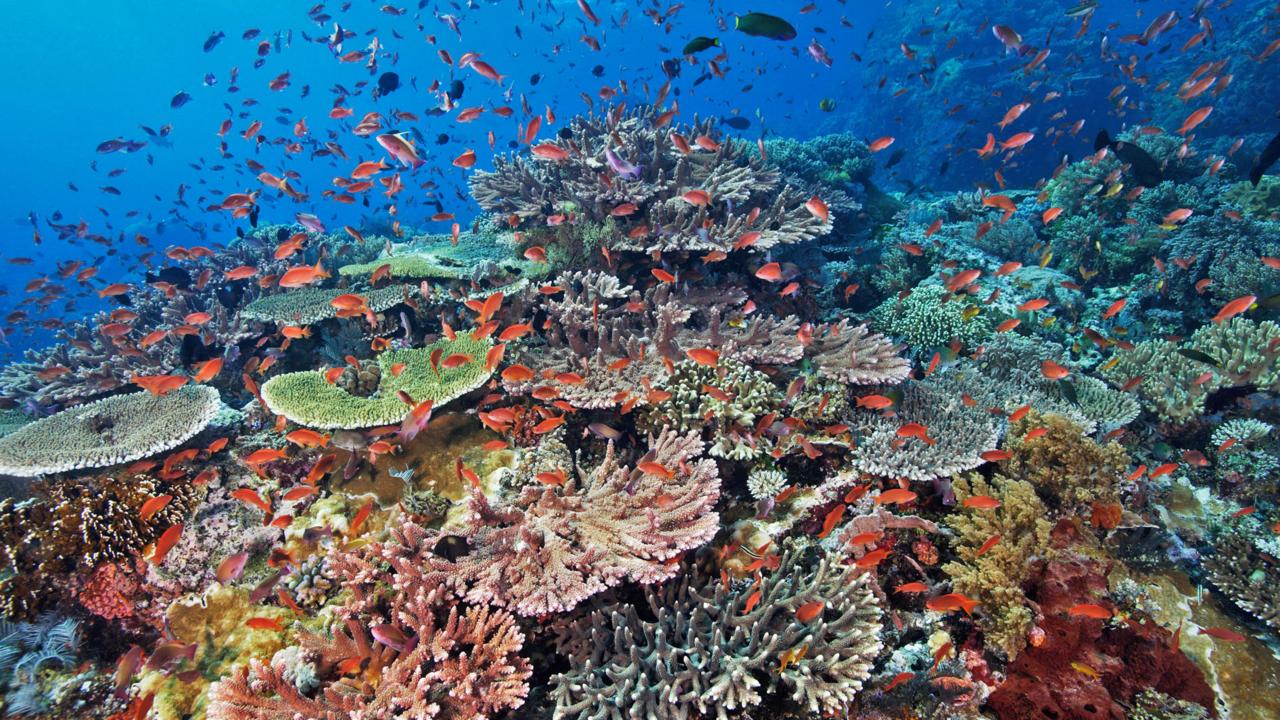
Daeng Abu and his wife teach local people about the importance of coral preservation (Credit: Credit: Brandon Cole Marine Photography/Alamy)
Daeng Abu and his wife teach local people about the importance of coral preservation (Credit: Brandon Cole Marine Photography/Alamy)
Abu ­– who believes he is now cured of leprosy – is a voice of age and wisdom in this cluster of islands. Cengkeh is much less isolated than is used to be, and Abu teaches passing fishermen and visiting islanders that killing coral kills the catch. Sometimes he reports “fish bombers” to the police; more often he enlists friends or family members to talk to them.
In an area where literacy levels are low and some islands have already annihilated their fringing reef, this micro-activism is vital: his message spreads from islet to islet, and even to the mainland. And Cengkeh's reef remains as pristine as it was when he first started diving more than 60 years ago.
Even though he is blind, Daeng Abu still lights up at the memory of the reef (Credit: Credit: Theodora Sutcliffe)
Even though he is blind, Daeng Abu still lights up at the memory of the reef (Credit: Theodora Sutcliffe)
Life can be hard on Cengkeh: a few years ago, the couple almost died of thirst after a delivery of fresh water did not arrive. Yet Abu's sightless eyes glistened as he remembered the reef. “It's unbelievably wonderful and perfect,” he enthused. “There's black, blue, yellow, green, red.... so many colours!”
I watched their loving, patient teamwork, the steady routine of a long marriage, as Maida guided her husband down the well-trodden paths to their solid wooden house. An Indonesian NGO, Dompet Dhuafa, built it for them a few years ago in honour of Abu's environmental work.
Despite hardships, Daeng Abu can often be seen in a joyous, toothless smile (Credit: Credit: Theodora Sutcliffe)
Despite hardships, Daeng Abu can often be seen in a joyous, toothless smile (Credit: Theodora Sutcliffe)
The wind was getting up and the mirror-flat sea was starting to chop. It was almost time to leave.
“I would change nothing about what God has given me,” Abu emphasised. “I'm happy. It's very peaceful. Everything – even disease, is a gift from God.”
PracticalitiesTo visit Cengkeh, take a taxi from the town of Pangkep, north of Makassar, to the port of Maccini Baji. From here you can catch a fishing boat to Cengkeh.
The same reef before, during and after a coral bleaching event in American Samoa (Credit: Credit: XL Catlin Seaview Survey)
The image shows the same reef before, during and after a devastating coral bleaching event in American Samoa (Credit: XL Catlin Seaview Survey)
The effects of coral bleachingThe image above shows the same reef before, during and after a devastating coral bleaching event in American Samoa.
Like in Indonesia, coral reefs around the world face similar threats. As underwater ecosystems change and water temperatures increase, marine life deteriorates rapidly. “Coral bleaching”, for example, refers to the whitening – an indication of stress – and impending destruction of these fragile organisms.

The man who created Paris

In the 19th Century George-Eugène Haussmann completely redesigned and rebuilt the French capital. Jonathan Glancey describes how the city of today was born.
Paris remains one of the world’s most visited cities, and of those tens of millions drawn to its remarkably compact centre each year, the Marais district exerts a magnetic pull. Fashionable among aristocrats before Louis XIV – the “Sun King” – moved his court from Versailles, this pungent quarter of narrow streets and jumble of historic houses and courtyards sank into near-squalor in succeeding centuries before its renaissance in recent decades as a charming labyrinth of fashion boutiques, cafés, restaurants, museums and galleries.
Marais, a jumble of streets and houses that is now a major draw for tourists (Credit: Credit: Alamy)
Napoleon III and Haussmann had their sights on areas like the Marais, a jumble of streets and houses that is now a major draw for tourists (Credit: Alamy)
Walking through these lively and endearing medieval streets, it seems almost incredible that they were once considered the enemy, to be demolished in haste – and not, it has to be added, by the German military, who had less than healthy designs on Paris at various times between 1870 and 1945. No, it was none other than the Emperor of France, Napoleon III, and his Prefect for the Seine, George-Eugène Haussmann – who died 125 years ago – who had districts like the Marais in their sights.
Haussmann turned Paris into a titanic building site for 20 years
Like much of Paris, however, the Marais stank to high heaven in 1853 when the emperor instructed Haussmann to rebuild the odorous city along grand and salubrious lines. Entire medieval quarters of the city were to be razed with modern avenues taking their place. “It was the gutting of Paris,” wrote Haussmann proudly in his Memoires.
Demolition man
A public administrator with no training in architecture or urban planning, Haussmann turned Paris into a titanic building site for 20 years. Even though he was forced to resign in 1870 as the emperor faced growing criticism for excessive expenditure, work on Haussmann’s plan continued until the late 1920s.
City park, Bois de Boulogne (Credit: Credit: Age fotostock / Alamy Stock Photo)
Haussmann engineered grand squares, a sewage system and city parks like the Bois de Boulogne (Credit: Age fotostock / Alamy Stock Photo)
Conceived and executed in three phases, the plan involved the demolition of 19,730 historic buildings and the construction of 34,000 new ones. Old streets gave way to long, wide avenues characterised by rows of regularly aligned and generously proportioned neo-classical apartment blocks faced in creamy stone.
Along with imperious avenues, Haussmann engineered grand squares, city parks modelled on London’s Hyde Park, a comprehensive sewage system, a new aqueduct giving wide access to fresh water, a network of underground gas pipes for lighting streets and buildings, elaborate fountains, grandiloquent public lavatories and rows of newly planted trees.
This urban infrastructure was matched by bold new railway stations – Gare du Nord and Gare de L’Est – the opulent Paris Opéra, new schools, churches, two dozen city squares, a brace of ambitious theatres at Place du Châtelet, the giant, iron-framed Les Halles food market, (Èmile Zola’s “Belly of Paris”), and the sensational network of a dozen avenues radiating from the Arc de Triomphe at the core of Haussmann’s Place de l’Ètoile.
A dozen avenues radiate from the Arc de Triomphe (Credit: Credit: Alamy)
A dozen avenues radiate from the Arc de Triomphe at the core of Haussmann’s Place de l’Ètoile – renamed Place Charles de Gaulle (Credit: Alamy)
Since renamed Place Charles de Gaulle, l’Ètoile is every foreign driver’s nightmare experience: well, you try heading into fast and furious traffic coming at you from 12 directions simultaneously while attempting to negotiate, or fight, your way around Napoleon Bonaparte’s monumental victory arch.
Rip it up and start again
No other major city, before or since, has been transformed so radically during peacetime. It employed huge numbers of skilled and unskilled workers along with architects, engineers and landscape gardeners. It restored the city to health after long decades of cholera and typhus. It gave Parisians of all classes parks to play and relax in.
Theoretically, its broad avenues allowed government troops free movement to maintain public order at times of barricades, riots and other disturbances. And, at a time when the city doubled in size and its population trebled, it gave Paris a sense of unity together with an air of bourgeois prosperity.
No other city has been transformed so radically during peacetime
What still seems astonishing is that so much of the city was demolished and reordered on what seems like the whim of an emperor and his Prefect of the Seine, Haussmann. Napoleon III, however, was following in the footsteps of his uncle, Napoleon Bonaparte, who had equally grand designs on Paris. “If only the heavens had given me twenty more years of rule and a little leisure”, he wrote in exile on Saint Helena after the Battle of Waterloo, “one would search vainly for the old Paris; nothing of it would remain but vestiges.”
In 1925, the visionary Swiss-French architect, Le Corbusier, published his Plan Voisin for Paris, a project sponsored by Gabriel Voisin, the French aviation pioneer and luxury car maker. Famously, Le Corbusier’s iconoclastic scheme envisaged the demolition of much of the city centre north of the Seine. This would be superseded by parkland sprouting a generously planted forest of high- rise concrete residential towers. Cars would speed across the city on elevated concrete roads free of pedestrians.
The Île de la Cité (Credit: Credit: Alamy)
Speaking perhaps of his transformation of the Île de la Cité, de Villefosse said “the old ship of Paris was torpedoed by Baron Haussmann and sunk during his reign” (Credit: Alamy)
If Le Corbusier’s unrealised plan was considered too extreme, Haussmann’s before him was criticised, too. The renowned statesman Jules Ferry (1832-93) wrote, “We weep with our eyes full of tears for the old Paris, the Paris of Voltaire… the Paris of 1830 and 1848, when we see the grand and intolerable new buildings, the costly confusion, the triumphant vulgarity, the awful materialism that we are going to pass on to our descendants.”
His work caused more damage than 100 bombings - Réné Héron de Villefosse
Or, as the 20th-Century historian Réné Héron de Villefosse put it, thinking in particular of Haussmann’s transformation of the Île de la Cité, “the old ship of Paris was torpedoed by Baron Haussmann and sunk during his reign. It was perhaps the greatest crime of the megalomaniac prefect and also his biggest mistake… His work caused more damage than a hundred bombings.”
We’ll always have Paris
When in 1944, as Allied forces marched to liberate the city and Adolf Hitler gave orders for the wholesale demolition of Paris, the German military governor Major General Dietrich von Choltitz refused to obey. Paris was simply too beautiful to violate. Napoleon Bonaparte, Napoleon III, Baron Haussmann and Le Corbusier had not shared such precious German sentimentality.
Haussmann’s big vision lives on in the typical building facades seen all over Paris (Credit: Credit: Hemis / Alamy Stock Photo)
Haussmann’s monumental plan remains impressive – his vision lives on in the typical building facades seen all over Paris (Credit: Hemis / Alamy Stock Photo)
Although bombastic, Haussmann’s monumental plan remains impressive, not least because he achieved so much so quickly to such a high, uniform standard. A public administrator by training, Haussmann was a commanding figure who, although a talented musician, was no sentimentalist. He even demolished the house he was born in – 55 rue de Faubourg-du-Roule – despite fond memories of childhood.
Haussmann was no sentimentalist – he even demolished the house he was born in
Of his first meeting with Haussmann in 1853, Napoleon III noted, “I had in front of me one of the most extraordinary men of our time; big, strong, vigorous, energetic, and at the same time clever and devious, with a spirit full of resources.” The partnership between the ambitious French emperor and his vigorous prefect was a truly remarkable one. Within a year of Haussmann’s dismissal for overspending, however, Napoleon III had fallen after France’s defeat in the Franco-Prussian War. Released from a newly unified Germany, he went into exile at Chiselhurst, Kent where he died in 1873.
After his dismissal, Haussmann was elected Bonapartist deputy for Ajaccio, Corsica, birthplace of Napoleon Bonaparte. He found time to write three volumes of self-serving memoirs. These might be largely unread today, yet his memory lives on powerfully today in the new Paris he shaped – and in cities like Barcelona that followed his lead – if not in the narrow, but much-loved streets of the Marais.